


Fantasy football running backs represent big business in today’s competitive landscape, where only around 30-35 feasible players exist at this critical position. Every owner starts at least two backs each week, meaning that in a standard 10 or 12-team league, two-thirds of available players occupy fantasy lineups while the remaining options sit on benches.
Why does this scarcity matter so much?
From my years of fantasy management experience, I’ve learned that staying on top of running back storylines becomes absolutely important when few viable players exist for waiver wire pickups throughout the season. Smart owners focus on grabbing the back who could sneak into a productive role or identifying trade targets worth trying to pry from league-mates.
Whether it comes to monitoring injury concerns like Christian McCaffrey’s questionable status or recognizing new opportunities such as Omarion Hampton’s bellcow potential, successful fantasy managers use tools like the FantasySP trade value chart and analyzer to craft the perfect swap when targeting players on other squads.
The situation around four teams and their backfields before the first Sunday of the NFL season requires careful analysis, especially after Thursday and Friday games provide possible clarity about team depth charts and role distribution.
Javonte Williams leads the way for the Dallas Cowboys
The Cowboys made a smart move this offseason by keeping their running back costs low, signing Williams and Miles Sanders for less than $5 million combined after letting Rico Dowdle walk to Carolina.
Week 1 showed us exactly what Dallas had in mind: Williams dominated the touches with 15 carries for 54 yards and two touchdowns, plus two catches for 10 receiving yards, while Sanders managed just four carries for 53 yards (though 49 came on one long run).
I think analyzing fantasy football backfields, volume always trumps efficiency, and Williams received three times more work than his veteran counterpart. Yes, his 3.6 yards per attempt looks pedestrian compared to Sanders’ 13.3, but fantasy owners should focus on the goal line carries and clear RB1 role Williams has carved out. Owned in 90% of leagues but started in only 10%, he’s the perfect trade target if you need running back help and can pry him away from an owner who might not realize they have Dallas’ lead back.
Omarion Hampton leads the way for the Los Angeles Chargers
The Chargers made a bold statement this first game when rookie Hampton completely dominated the backfield with 50 snaps compared to Najee Harris’ measly 11 snaps, creating a stark contrast that caught many fantasy owners off guard.
After signing Harris to a one-year contract in the offseason before drafting Hampton in the first round, Los Angeles showed clear intentions about their long-term option at running back. ESPN’s Bill Barnwell noted the telling numbers: Hampton handled 15 carries and ran 18 routes while Harris managed just 1 carry and 5 routes.
From my years analyzing fantasy backfields, when a rookie outplayed a veteran by five times the snaps, it’s impossible to ignore the writing on the wall. Sure, Hampton gained only 48 yards for a paltry 3.2 yards per attempt and added two catches on two targets for 13 yards without reaching the end zone, but fantasy success isn’t always about efficiency when you dominate the time on the field.
Harris is likely to be dropped in most of the 60% of leagues where he’s owned, making Hampton the clear winner and a player worth grabbing if you’re desperate at running backs.
Quinshon Judkins finally signs his rookie contract with the Cleveland Browns
After months of legal issues that have since been cleared, Judkins finally signed his rookie deal on Saturday and can join the team for the first time since being drafted 36th overall in April.
While he won’t play in Week 1, this second-round pick has a clear path to immediate production once he gets acclimated to Cleveland’s system.
I think watching rookie running backs break through, Judkins faces minimal competition on the depth chart with only Jerome Ford, a middling three-year veteran who lacks the top-end talent that made Judkins so highly regarded coming into the league. Fellow rookie Dylan Sampson was taken in the fourth round this year, but chances are the second-round pick will get more opportunities at the top of the depth chart than a guy selected much later.
Owned in around 70% of leagues, Judkins represents a higher-upside fantasy pickup than anyone else on Cleveland’s roster at any position. Ford remains a feasible fantasy option for at least one week, but his spot might be in peril moving forward depending on how quickly Judkins can make an impact. Should you own Ford and someone offers value in a trade, it’s worth considering since he could lose most of his touches once this talented rookie takes the field.
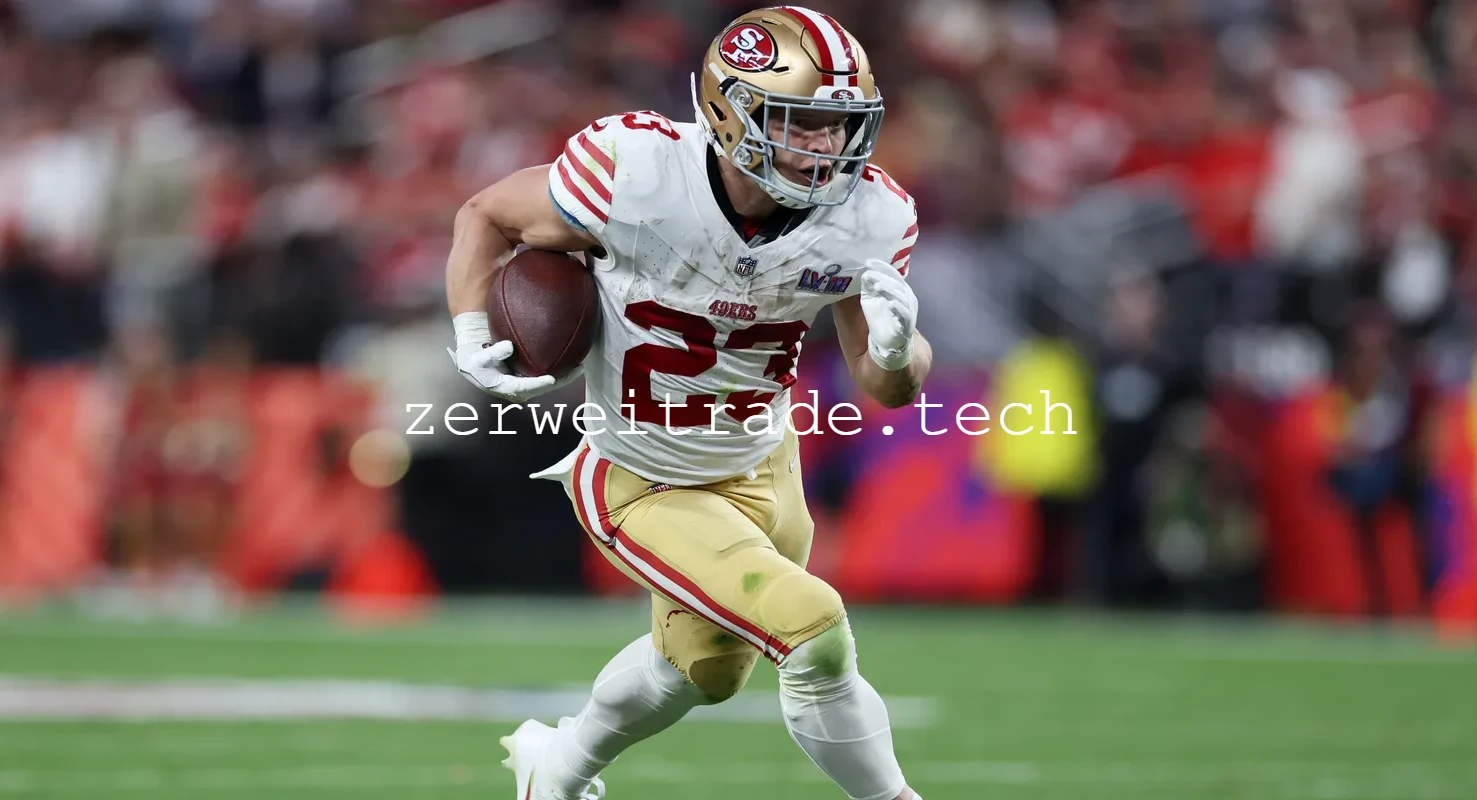
Christian McCaffrey is listed as questionable for Sunday’s opener
McCaffrey carries a long list of injury woes throughout his career, most notably missing most of last season with a calf/Achilles ailment that wasn’t reported as serious until right before the season, catching fans and fantasy owners off guard after he played in just four games, making him THE fantasy bust of 2024 despite being drafted first overall most often.
This year’s initial injury is reportedly not serious, and McCaffrey is expected to play in Week 1, though it’s reasonable to be skeptical given his history. From my years analyzing running back situations, newly acquired Brian Robinson (traded from the Commanders) would step into the lead role if McCaffrey were to miss any time, and news of McCaffrey’s possible ailment led to a spike in ownership, moving Robinson closer to 80%.
While I tend to lean into upside and there aren’t many guys who offer more fantasy potential than McCaffrey when he’s on, Robinson represents intrigue as a handcuff since he would theoretically jump into big-time production on the 49ers, making him worth grabbing as either a handcuff to McCaffrey or even just an end-of-bench player if you don’t own the star back.